
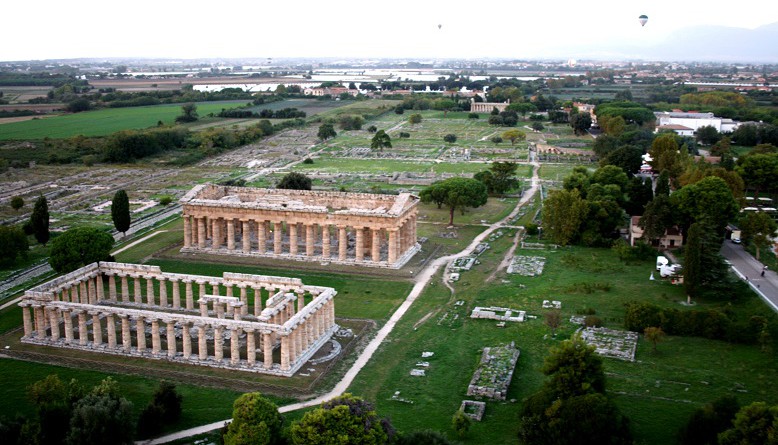
A trip to the ruins of Paestum
The archaeological site of Paestum is located south-east of the Gulf of Salerno, precisely on the southern part of the Sele plain.
Paestum is an archaeological site of basic importance, and it is one of the few sites with most of the buildings still well preserved. It is recognized World Heritage by UNESCO exactly because of its historical importance.
When was Paestum born?
Paestum was founded around the seventh century BC by the Greeks, with the name of Poseidonia. Then Paestum was later occupied by the Lucanians until 273 BC, when the city of Rome decided to make it a thriving colony, giving it the name we know today, that is Paestum.
The beautiful city, however, knew its decline during the Middle Ages.
Why is Paestum so important?
The value of Paestum is enclosed within its walls, today has become so important for the extraordinary preservation of its evidences, such as the perimeter walls that during the course of history were strengthened by the Greeks, then by the Lucanians and finally by the Romans , giving us a rare historical proof of their architectural and artistic skills.
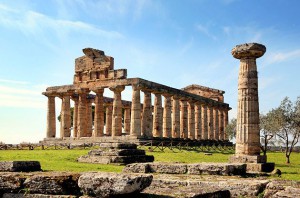 One of the most beautiful features of Paestum are its three temples located in a vast green plain that, depending on the position of the sun, create a different colouring very suggestive and particular.
Over the centuries, many writers, artists and poets such as Canova and Piranesi were fascinated by this wonderful spectacle that gave inspiration to create just as many wonderful works.
When do the temples date back?
The temples were built in different periods, the first that is the Temple of Hera, which dates back to the sixth century BC. The second one instead, the Temple of Neptune, dates back to around the fifth century BC.
This temple looks like a majestic building entirely made of travertine, of golden color that varies in tone depending on the sunlight.
It is a proper work of art, a jewel of architecture. The third and last building is the Temple of Ceres built around the sixth century BC, was actually dedicated to the goddess Athena, and then during the Middle Ages turned into a church.