
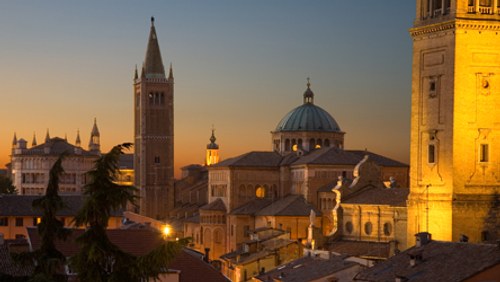
Parma and the joy of living
Located in an area particularly conducive to any tourist looking for historic buildings of considerable artistic value in terms of Romanesque architecture, the city of Parma allows its visitors to pass unrepeatable holiday moments because of its rich offer of leisures and cultural proposals .
It starts from the notes “Sundays of flavors”.
Here we celebrate street food from the streets and the main meeting places of the city.
The offers dedicated to good living are embodied in a series of events that have as their object the desire to stay in company by rediscovering the tradition.
In fact, tasting moments and historical research merge into exhibitions and museums.
Vegan festivals are proposed or vice versa on the subject of meat and fish. , with particular attention to one of the typical local products, known throughout Italy for its production quality: ham.
There is no shortage of themed events, especially close to summer holidays, autumn or winter. We add cooking classes and tastings in the square, along with historical research on the customs and traditions of the country, then displayed in the local museums.
Parma Symphony Orchestra
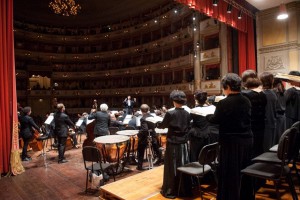
Many evening entertainment and show sponsored by the city.
Rassegne which celebrates the spread of a particular popular genre popular in the culture of Parma.
Some events are often organized by the local Symphony Orchestra, to satisfy the musical and cultural tastes of all the participants, under the banner of a rediscovered joy in the local entertainment of Parma.
What to see in Parma.
 A beautiful city full of important monuments, starts from Piazza del Duomo which is among the most beautiful (but also little known, unfortunately) in the world.
Duomo, Baptistery and Palazzo Vescovile are the triptych of a mosaic that bear witness to a literally millenarian history.
The first is considered the most beautiful example of Romanesque Lombard, a realization begun in the year 1100, and frescoed (the dome) in 1526 by Correggio.
The Baptistery, on the other hand, is an octagon (inspired by the 8th day when Christ is a resource) that dates back to the end of 1100, externally embellished by the pink marble of Verona.
The outside is instead full of images that describe the life of Jesus and of Mary, of the Baptist, death and resurrection.
The Episcopal Palace, today the bishop’s seat and the Diocesan Museum, has faced different eras: medieval, renaissance, baroque, twentieth century.
A long main façade that immediately strikes, while the upper levels are full of details, from remarkable arched Romanesque triphoras, subdivided by thin columns coupled in red Verona marble.
The large internal courtyard is the fulcrum of a Renaissance portico with columns framing an elegant loggia.
Not far from there is the Palazzo della Pilotta.
In one shot you can visit two masterpieces: the Farnese Theater and the National Gallery. Here works by Fra Angelico, Leonardo da Vinci, Guercino, El Greco, Tintoretto, Tiepolo, Van Dick and many others