
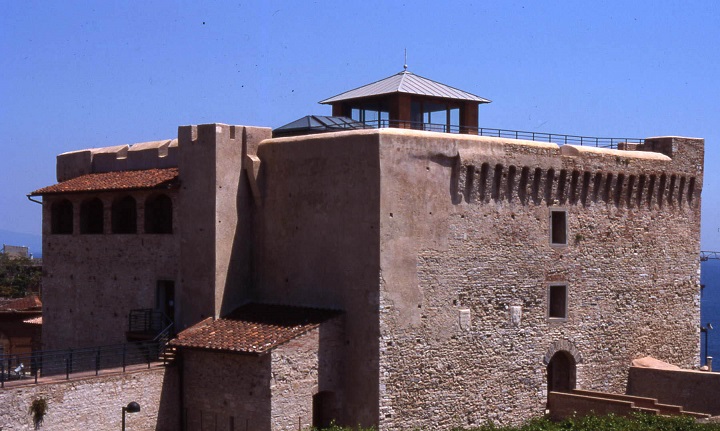
The impressive Castle of Piombino
The Castle of Piombino in all its monolithic presence is located in Via delle Mura, obviously in Piombino, as the name itself suggests, in the province of Livorno.
This castle is embedded in the 16th century bulwark Medicean Fortress, and is the main defensive military work that has remained in the city to date, its location is on the south-east slope and stretches along the sea.
History of Piombino Castle
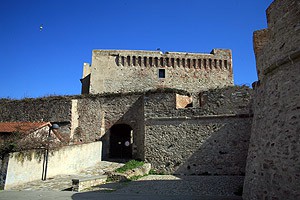 The imposing Castle of Piombino, determined exactly what was, in the past, the city’s boundary on that side, and there was also a small town gate.
The city wall was erected as a defensive barrier of what was at the time one of the most important ports of the Tyrrhenian coast.
Today, the original main entrance built in 1235 is embodied into the Cassero of the Fortress.
It was originally built in the 13th century by the Pisians and its name was “Cassero pisano”, it was rather cubic.
Between 1502 and 1504, Leonardo Da Vinci, one of the greatest artists and inventors of all time, spent some time in Piombino.
He never stopped honing his architecture skills and made a few changes on the rampart re-ordering the defence works constructed previously.
After the fire spread, Cosimo de’ Medici, between 1552 and 1557 commissioned architect Giovanni Battista Belluzzi to turn the stronghold into a star fort the design of which is often a pentagon or hexagon with bastions at the corners of the wall.
Since then the Castle is called “Medici Fortress”.
 Over the years the Castle has been taken over several times by the French and Austrians.
It is still possible to contemplate some of the graffiti the prisoners drew.
Between 1999 and 2001 the Castle of Piombino was restored and saw several excavations.
Today it houses the museum of the Castle and City of Piombino.
Once they get in, all visitors can follow what were the main events that left a mark on the city over the centuries.
Many archeological finds can be seen on the first floor of the Museum.
On the second floor Piombino’s history uncovers before our eyes showing visitors that part of the so called Underground Movement (la Resistenza) that has never been narrated that well before.