
Carthusian monastery of Padula
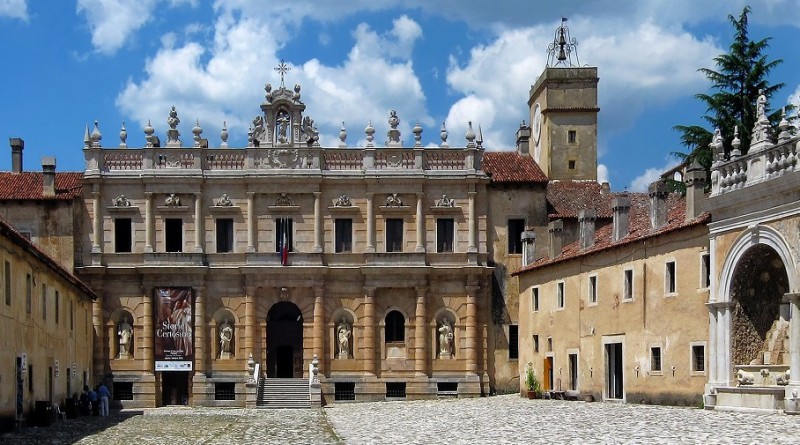
In the province of Salerno there is the first Carthusian monastery raised in Campania, the majestic Carthusian monastery of Padula, or San Lorenzo, precisely in Padula, in the Vallo di Diano.
This monastery is not only the largest nationwide but also one of the biggest in Europe. In 1998 it was declared a World Heritage Site by UNESCO.
Background
Tommaso The Sanseverino, Count of Marsico and lord of the Vallo di Diano, built the Carthusian monastery of Padula. Construction works began on 28th January 1306. The monastery was then donated from Sanseverino to the religious order of French origin, the aim was to ingratiate himself with the liking of the Naples royal family.
 The area where the monastery of Padula was built was owned by Sanseverino. It was an excellent choice being a strategic point, because it has an expanse of fertile fields surrounding the monastery, where the fruits of the earth were cultivated. In fact the monks produced everything from vegetables to fruit to the wine and olive oil; these not only served the monks for their livelihood and to sell them, but they also had control of the roads leading to the southern regions of the Kingdom of Naples. And it was also the only collection center of manpower in that area.
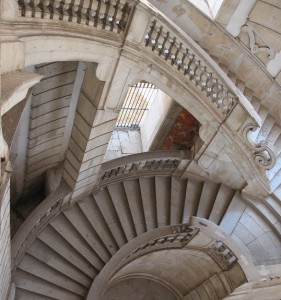
In the ‘500 several historical figures also stayed there such as Charles V followed by his army. After the Council of Trent, the main facade in the courtyard and cloister of the guest house were added to the original fourteenth-century structure. From 1583 until the second half of the eighteenth century, the monastery went through many modifications and additions to then get the current grand architectural features mainly in Baroque style.
The Carthusian monastery of Padula
It is since 1957 that the monastery houses the Provincial Archaeological Museum of Western Lucania, which exposed a collection of artefacts from excavations of the necropolis of Sala Consilina and Padula, for a period that starts from the prehistory to the Hellenistic age.
The Carthusian monastery of Padula covers an area of about 51,500 m² and includes:
- cloisters
- a garden
- a courtyard
- a church
- the large kitchen
- the large cellars
- the surrounding fields where there were cultivated the fruits of the earth and much more.
So it is really a wonderful tourist destination, a place to visit because there is so much to see.