
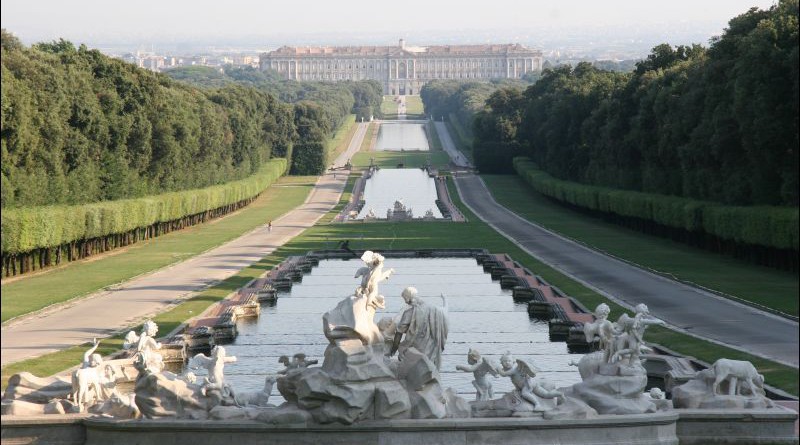
The splendid Royal Palace of Caserta
The Royal Palace is one of the sites of UNESCO which most affected the history of the place thanks to the intense relationship with the story of the king of Naples Carlo Bourbon.
Who wanted to build it to give merit and value to its capital, Naples.
It is said that the king wanted to compete with the magnificence and beauty of the most renowned realms in the world and in Europe.
Including the Austrian ones and especially the royal palace par excellence, Versailles.
 The Royal Palace was also built in a compromise position between the different places of the city, in order to make it unlikely vulnerable to attacks, but not far from the historic center for a greater accessibility.
The original design of the Palace of Caserta did not however reveal a simple local embellishment, instead it was based on criteria of functionality including the presence of a aqueduct in the vicinity.
The works that led the Royal Palace of Caserta to the current splendour lasted for a long time, and continued throughout the whole nineteenth century, being completed in 1845, and at the cost of so much effort, proving its grandeur in the number of rooms, more than 1200, and a series of columns and windows created according to the principles of Baroque, who was regaining new vigor at the time.
The palace is also remembered to host a number of works of art from different parts of the world, especially still lifes, orientalistics and landscapes with historical settings.
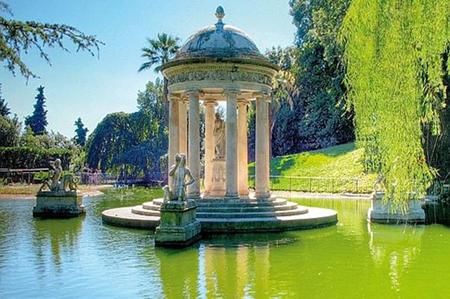 Not missing, finally, the presence of highly evocative surroundings like the Reggia.
The local royal park of Caserta extends for several kilometers, crossed and encircled by fountains systems (including fountain Canestro or Margherita), home to exclusive hangouts and often set of some classic works of cinema, including also stages of scripts taken from the new international best sellers, who find in the Royal Palace of Caserta the right combination of art and nature to give birth to beautiful scenery.